Guide
Long distance driving with a dog or cat
Many people drive their own pet to a new home, and it often goes well with a little planning. Others hand the drive to a pet transport company. This guide covers both: tips for the drive, when hiring a driver makes sense, and what a door to door road move looks like from the owner's side.
Can you drive your pet a long way yourself?
Yes. A healthy dog or cat that is used to the car can manage a long drive with planned breaks, a secure place to ride and someone to keep an eye on it. It works best when you are driving to the new home anyway, your pet already travels calmly, and you have the days to do the trip at an easy pace.
It is harder when you are flying to start a new job, the car is full to the roof, two adults are not available to share the driving, or your pet gets anxious or car sick. Those are the moves where people look for help.
What are the best tips for a long drive with a dog?
Plan the stops before you plan the miles. A dog does best with regular breaks, the same food it eats at home and a secure spot in the car.
- Stop every 2 to 3 hours. Water, a short walk on a leash and a bathroom break. Keep the leash on at every stop: a rest area is a bad place to lose a dog.
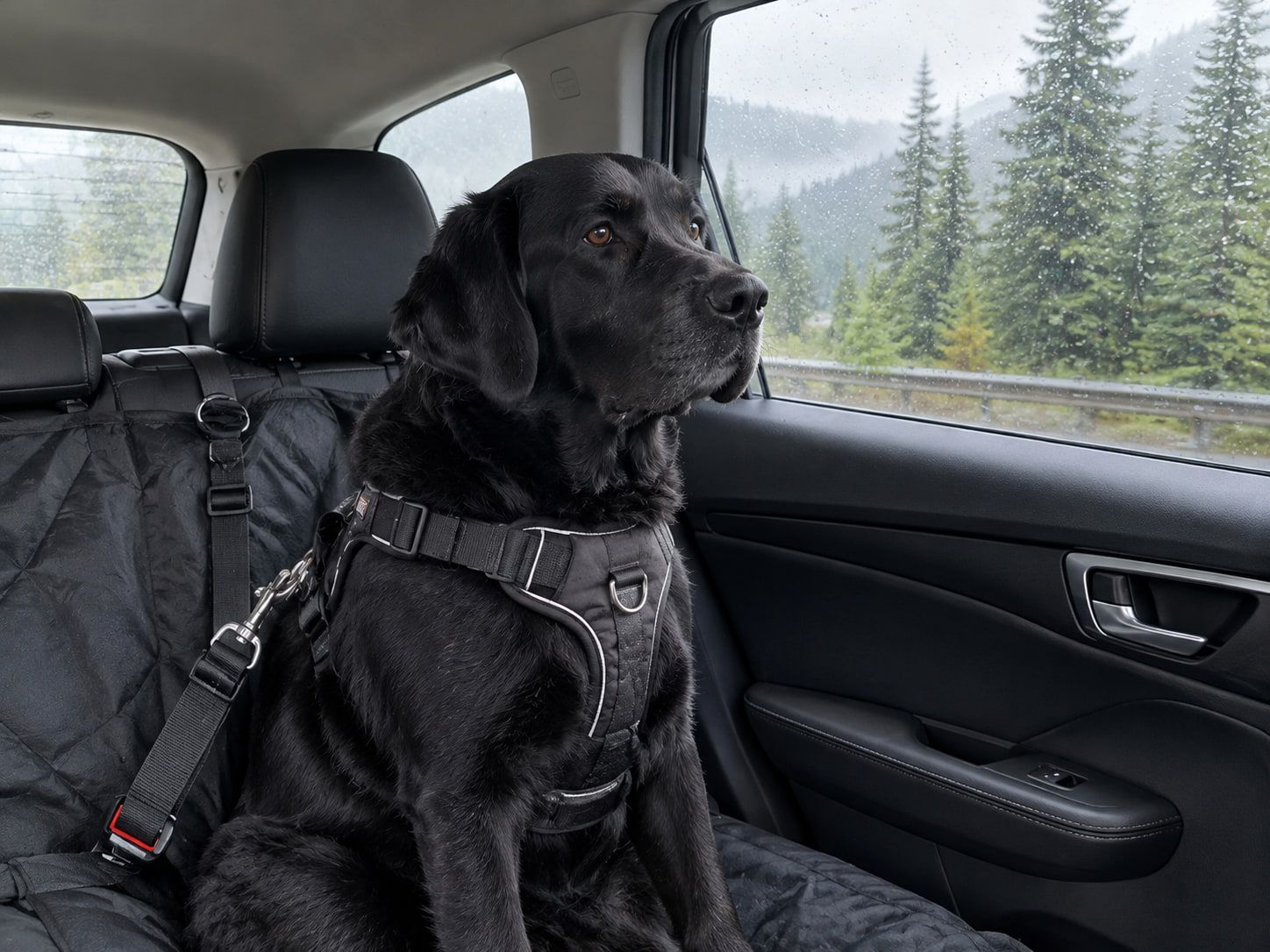
- Keep your dog secured. A crate or carrier strapped down, or a car safety harness clipped to a seat belt. A loose dog can be thrown forward in a hard stop.
- Never leave your pet in a parked car. Not on a warm day, not on a cold one, not for a quick stop.
- Feed light. A smaller meal a few hours before you set off, and the usual food on the way. A new food on a travel day often means an upset stomach.
- Book pet friendly places to stay ahead. On long empty stretches, a late search for a room that takes dogs can go badly.
- Pack a pet bag: food, water, bowls, any medication, the vet records, a spare leash, waste bags, paper towels, a towel and a recent photo of your pet.
- Update the ID first. A tag with your cell number on the collar, and your new address and number on the microchip record.
- Check the weather and the passes. Heat in the car and winter roads in the mountains both change the plan.
If your dog gets car sick or very anxious, talk to your vet before the trip. Do not give any calming medicine without your vet's advice.
How do you travel with a cat in the car over a long distance?
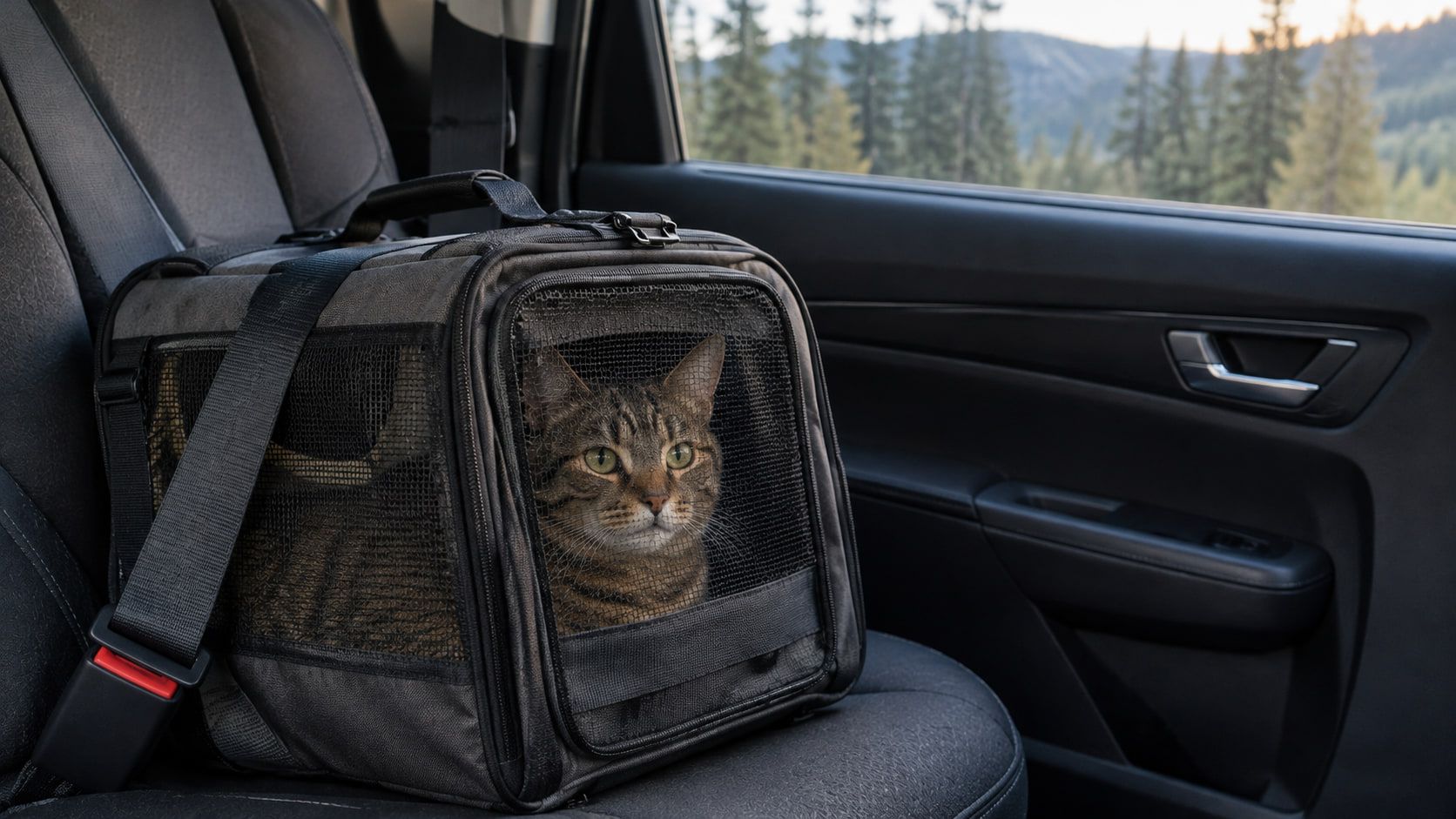
In a closed carrier, every time. Most cats are calmer when they cannot see much and cannot get loose, and a cat that slips out of the car at a gas station may not come back.
- Leave the carrier out at home for a few weeks with a blanket inside, so it is a normal part of the house.
- Belt the carrier in, and put a towel over part of it if your cat settles better in the dark.
- Only open the carrier with the car doors and windows shut. A small litter tray on the floor of the car, or in the room at night, covers bathroom breaks.
- Offer water at stops. Many cats eat little on a travel day and catch up once they arrive.
- At night, let your cat out in one closed room, and check under the bed before you leave in the morning.
Moving a cat with our help instead? See cat transport.
When do people hire a pet driver instead?
Usually when the owner and the pet cannot travel together, or should not. The common reasons:
- You are flying. You start a job or close on a house in the new city, and your pet follows by road.
- Your pet should not fly. On Alaska Air Cargo, snub-nosed dogs and cats, such as every bulldog, boxer, pug and mastiff, plus Persian and Himalayan cats, are not accepted in the cargo hold, mixes included. Alaska's restrictions page said so when we read it on October 14, 2026. These pets often go by road.
- The timing does not work. You are packing, handing over keys and driving a moving truck, and a pet in the middle of that has a hard day.
- Several pets. Two dogs and a cat in one car with a full load is a lot for one driver.
Doing it yourself has its own costs: fuel, hotel nights that charge pet fees, food on the way and days away from work. Weigh the whole trip, not just the drive. We move dogs by road, by air or both: see dog transport.
How does a door to door road move with Seattle Pet Valet work?
You tell us where, when and about your pet, and we plan the trip. You do not choose road or air: we look at the distance, the breed, the age and the season, and your quote says how your pet travels. Licensed, contracted partners do the pickups and the driving. This is how a road move runs from your side.
- Tell us about the move. Both addresses, your date, your pets and anything we should know. Tick the vet visit if you want us to arrange it. Road moves are priced by hand: we prepare your quote and email it to you.
- Papers. We tell you which papers your pet needs for where it is going, such as a rabies certificate or a vet health certificate, and when to get them.
- Pickup at home. An adult hands your pet over at your door, with its things and its papers.
- The drive. Stops for water, food and a walk where your pet needs them. On a hot day the trip is planned around the heat.
- Delivery. Your pet is handed to you, or to an adult you name, at the new door.
Owners do not ride along on the rides we arrange. A run can carry more than one pet. How long the trip takes depends on the distance: shorter drives often arrive the same day; longer ones can take until the next day.
Moving between Seattle and Canada? The border papers come with the move, and we arrange customs clearance through a licensed customs broker. See pet relocation between Seattle and Canada.
What should you hand over with your pet?
Everything your pet needs for the trip, packed in one bag, plus the papers. Whether you drive yourself or hand your pet to a driver, the list is much the same:
- Food: enough of the usual food for the whole trip and a little extra, with a note of how much and when.
- Medication: in its labeled container, with written instructions. Tell us about any medication when you book.
- Records: the rabies certificate and recent vet records.
- A health certificate, if the destination asks for one. Some states want a certificate from a vet before a pet moves in. We can book the visit with your own vet: see the vet health certificate.
- A collar with an ID tag and a leash, or a harness that fits well for a cat.
- Something that smells of home: an unwashed blanket or a towel your pet sleeps on.
Also tell us about anything that affects the trip: recent surgery, fear of other dogs, a cat that escapes, a dog that chews through bedding.
Does a pet ride in a crate, a carrier or loose?
On the road, it depends on the pet. With us, a pet may ride in a carrier, in a crate or loose, whatever suits that pet, and we settle it with you before the move. A crate is only a must when a pet flies: in the air, pets always travel in an airline approved crate.
If you drive yourself, a strapped-down crate or carrier, or a car safety harness for a dog, keeps your pet in one place if you brake hard.
Long distance drives with a pet: questions
How long can a dog ride in a car on a long trip?
Is it better to drive or fly a dog across the country?
Can I ride along with my pet?
Does my pet travel with other pets?
Do I need a health certificate to drive my pet to another state?
How long does a road move take?
Last checked against the official pages on October 14, 2026.
Airline and state rules can change, so check the official page before booking.
Rather hand over the drive?
Tell us both addresses and about your pet. We plan the trip, prepare your quote and email it to you.