Guide
Moving a dog or cat across the country
A practical guide to long distance moves with a pet, into or out of Seattle. It covers flying versus driving, the ways a pet can fly, a week by week plan and the papers you will need, based on the airline's own rules.
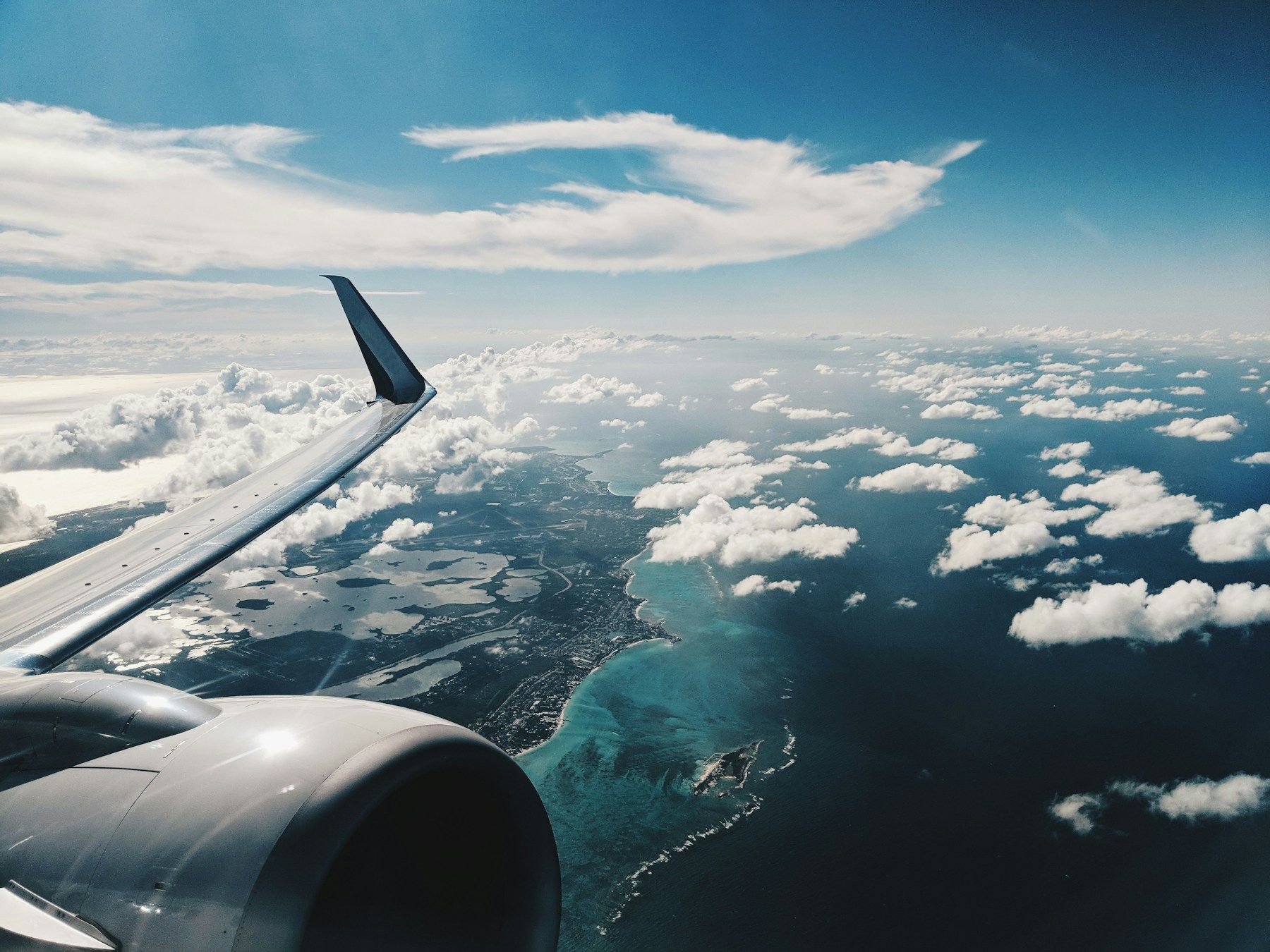
Fly or drive?
Seattle is tucked into the northwest corner of the map. A drive to the East Coast, Texas or Florida means several long days: strange smells, a different motel each night, and hour after hour in a carrier or on the back seat.
By air, the trip is measured in hours. Seattle to New York is about 5 to 5.5 hours. Seattle to Miami is about 6 hours. Flying still has its stresses, since the crate, the sounds and the handling are unfamiliar. Even so, most healthy dogs and cats cope better with a few hours on a plane than with a week in a car.
Our moves are by air. Road moves are not something we offer. Browse our routes.
Driving yourself
A road trip with your pet can make sense, and in some cases it is the better plan: when your vet says not to fly, when a snub-nosed pet is too large for the cabin, or when your dog needs a bigger crate than the airline accepts. Tips for the drive:
- Limit each day. Aim for 8 hours behind the wheel at most, and pull over every 2 to 3 hours so your pet can drink, stretch on a leash and relieve itself.
- Reserve pet friendly hotels in advance. Searching late at night is risky, above all in the mountain and desert states where towns are spread out.
- Keep your pet secured in a carrier or crate that is strapped down, or in a car safety harness.
- A parked car is never safe for a pet left alone, whether it is hot or cold out.
- Bring a pet kit: the usual food, water, bowls, medicines, vet records, a leash, poop bags, a towel and a current photo.
- Check mountain passes in winter. Snow sometimes shuts them. Keep a blanket and spare food in the car.
Cargo, cabin or checked bag
A pet can fly in one of three ways. The pet policy is the same at Alaska Airlines and Hawaiian Airlines, and what follows comes from it.
As cargo, on its own
The pet has a booking of its own with Alaska Air Cargo and rides in an airline approved crate. No one needs to be on board with it. Hand-in happens at the cargo building, separate from the passenger terminal, at most 4 hours ahead of departure, and pets are normally ready around 1 hour after the plane lands. We arrange this type of move from door to door. Read Alaska Airlines pet cargo.
With you, in the cabin
A small dog or cat can ride in a soft carrier stowed under the seat ahead of you. Look up the size limit in the Alaska Airlines pet policy before buying a carrier.
With you, as checked baggage
Larger pets can go in the hold on your flight, inside a hard kennel and with a health certificate. If you fly another airline, check its rules on its own site. Alaska and Hawaiian are covered in our airline guide.
Taking your pet on your own flight? We can still sort out the crate and the vet visit, and arrange for your pet to reach SEA in time to meet you at check-in. Since owners do not ride along, you make your own way to the airport. Read about airport pet transport.
Timeline: 8 weeks to arrival
Moves on shorter notice are possible, but this pace keeps things relaxed. Hawaii needs a much earlier start: read moving pets to Hawaii.
8 weeks before
- Choose: your pet flies with you, flies alone as cargo, or goes by car.
- Price your route and dates now, so the choices are clear from the start.
- Compare your pet's breed with the airline rules, in particular for snub-nosed breeds.
- Read what your new state requires on pet entry rules by state.
- Ask the landlord or building at the new place for written pet approval.
- Take your pet's measurements and run the crate size calculator. Buy the crate early so training can begin.
4 weeks before
- Begin crate training (steps below).
- Lock in your dates with us. For summer moves, look at the heat rules for the city you are going to.
- Have your vet update any vaccines, and ask for copies of the records plus the rabies certificate.
- Line up a vet near the new home and check they are accepting new patients.
2 weeks before
- Schedule the health certificate visit so it falls within 10 days of the flight. Go too soon and it will have expired by departure.
- Settle who will be at the new home when your pet arrives.
- Put your new address and cell number on your pet's microchip record.
The week before
- Hold walks, meals and bedtime to their normal times. Leave your pet's belongings until the end of packing.
- Place an unwashed blanket or shirt that smells of home inside the crate.
- Fit the collar with an ID tag showing your cell number.
- Skip sedatives unless your vet prescribes them. No medication of any kind is given by the airline in transit.
Paperwork and state rules
When you move between states, you deal with two rulebooks: the airline's, and your destination state's.
The airline
- Health certificate: Alaska Air Cargo needs a health certificate from a licensed vet for every pet flying in the cargo hold, issued within 10 days of the flight (14 days for dogs and cats going to Hawaii).
- Rabies certificate: required by the airline on Alaska and Hawaii routes, and most states want proof of a current rabies shot. Carry it whatever the route.
- Acclimation letter: needed if any airport on the trip is below 45°F.
- Forms and labels: the air waybill, a food and water certification fixed to the crate, "Live Animal" labels, and contact names and numbers for both ends.
The state
Pets moving between states with their owners are not regulated by the USDA. As it puts it, "domestic movement requirements are set by the receiving State or Territory". What you need depends on the destination: a health certificate from an accredited vet, a current rabies vaccine, or other items. Our pet entry rules by state page covers each state on our routes, linked to official sources. Share it with your vet. Hawaii and Alaska each have a dedicated guide: Hawaii and Alaska.
Coming to Seattle? Washington requires a current rabies vaccine for dogs, cats and ferrets aged 90 days or more. You will find it on the same pet entry rules by state page.
On moves we arrange, we fill out the airline forms and labels and double check them before hand-in.

The crate and crate training
Pets in the hold always fly inside a hard, airline approved crate. Between home and the airport, a pet may be in a carrier, in a crate or loose, whatever suits that pet. The flight crate has to meet the airline rules:
- Hard sides joined by nuts and bolts, a solid top, and no door in the roof.
- A metal door that fastens securely.
- Dishes for food and water fixed inside the door, plus absorbent bedding.
- No wheels, and no collapsible, wire or fabric crates.
- Enough room to stand with the ears clear of the top, turn in a circle and lie down.
Alaska accepts the 100 to 500 series, with a limit of 150 lb for pet and crate combined. We supply airline crates set up for the flight. This crate size is our best guess from the details you gave. A larger crate can turn out to be needed once your pet is measured in person, and the airline has the last word at check-in. We confirm the size with you before ordering.
Crate training in four steps
- Let it blend in. Set the crate up, door open and a blanket inside, in a room your pet uses every day. Leave it in place.
- Link it to good things. Toss in treats. Serve meals inside it. Praise your pet whenever it wanders in by itself.
- Shut the door briefly. Start with one minute, then five, then twenty, staying close by. Open up before your pet starts to fuss.
- Rehearse the trip. Pick the crate up, walk it around, go for a short drive. Pets that have practiced a few times handle the real day far better.
Do not use the crate to punish. The goal is a den where your pet feels safe.
Heat, cold and breeds
Temperature: Alaska generally accepts pets in the cargo hold only when the forecast is between 45°F and 85°F at every airport on the trip. Below 45°F a vet acclimation letter, issued within 10 days of the flight, is needed. Some cities close to pets in summer. Between May and mid October, Las Vegas, Miami, Dallas, Austin, Chicago and some other cities stop taking pets for part of the summer. The dates are in summer heat rules.
Snub-nosed breeds: as of October 1, 2026, Alaska, Hawaiian and Horizon aircraft no longer carry snub-nosed dogs and cats in the hold. That includes every bulldog, boxer, pug and mastiff, as well as Persian and Himalayan cats, and mixes of these breeds. Read snub-nosed breeds and flying.
Cats: a cat flies just like a dog, in the same type of crate. Put the crate out weeks ahead, shut your cat in a calm room while you pack, and give it a single room at first in the new place. Our cat transport page has more.
The day of travel
- Food and water are offered to your pet within 4 hours of departure. Your vet can say how much; many suggest a small meal.
- Give a long walk before pickup, followed by a last bathroom break.
- Your pet is collected from home and handed in at airport cargo at most 4 hours ahead of departure. A message tells you once check-in is done.
- On arrival, pets are normally ready around 1 hour after landing and must be picked up within 4 hours. We arrange that pickup and the drive to your new home, unless a person you choose collects your pet.
- Once home: water, then a brief leashed walk, then a calm room.
What it costs
Your pet's size is the biggest factor in the cost of a cross-country move, since the airline bills for the pet and crate weighed together. How far each home is from its airport, the crate and add-ons like a vet ride also play a part.
The quote form prices your route and your pet. For moves we price by hand, expect our reply within 24 hours. Read what affects the cost, or choose a route:
- Seattle to Los Angeles
- Seattle to San Francisco
- Seattle to San Jose
- Seattle to Phoenix
- Seattle to New York
- Seattle to Honolulu
- Seattle to Anchorage
- Seattle to Dallas
- Seattle to Houston
- Seattle to Denver
- Seattle to San Diego
- Seattle to Chicago
- Seattle to Boston
- Seattle to Washington, DC
- Seattle to Boise
- Seattle to Austin
- Seattle to Las Vegas
- Seattle to Miami
- Seattle to Atlanta
- Seattle to Minneapolis
- Seattle to Maui
- Seattle to Kona
- Seattle to Fairbanks
- Seattle to Juneau
Coming to Seattle? Los Angeles to Seattle, San Francisco to Seattle, San Jose to Seattle, Phoenix to Seattle, New York to Seattle, Honolulu to Seattle and more routes.
A road trip costs money too: gas, hotels that charge pet fees, food on the way and time away from work. Add those up before choosing.
After you land, read helping your pet settle in for the first day and week in the new home.
Moving pets across the country: questions
Should I fly or drive my pet across the country?
What does a cross-country dog move cost?
Will you drive my dog to my new home?
Is a health certificate needed to move to another state?
Does my pet have to fly when I do?
Is summer travel possible?
Where do you fly pets?
Last checked against the official pages on October 6, 2026.
Airline and state rules can change, so check the official page before booking.
Rather hand it off?
Home pickup, the crate, the forms and the flight, arranged door to door into or out of Seattle. The eight-week plan above shrinks to one form.